
Choosing between polished concrete and hybrid flooring can be difficult. Both are popular options for Adelaide homes and businesses, but they perform quite differently over time.
The right choice depends on how the space will be used, the level of wear it will see, and how much maintenance you are prepared to do. Looking at how each option performs in Adelaide conditions gives a clearer picture than comparing features alone.
How Polished Concrete Performs in Adelaide Conditions
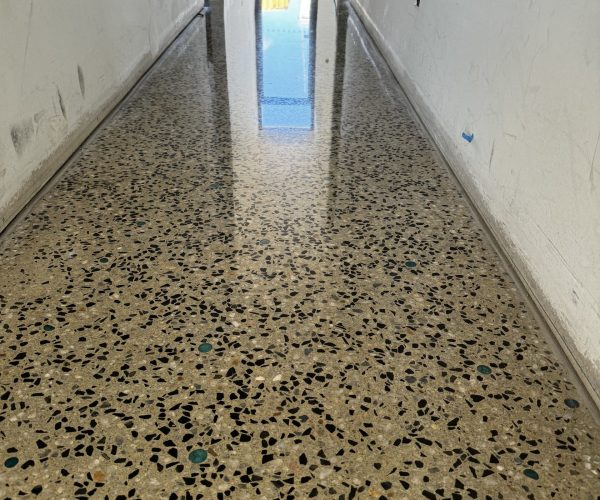
Polished concrete generally performs well in Adelaide’s climate.
Concrete is stable and not affected by temperature changes in the same way as some other flooring materials. It does not expand, contract, or move as noticeably, which helps maintain a consistent finish over time.
It also has thermal mass properties. This means it can absorb heat during the day and release it slowly, which may help regulate indoor temperatures in some homes.
Sealed and polished concrete is also resistant to everyday spills and moisture, making it suitable for kitchens, living areas, and commercial environments
How Hybrid Flooring Performs
Hybrid flooring combines a rigid core with a vinyl surface layer. It is designed to mimic timber while offering improved water resistance compared to traditional laminate flooring.
In stable indoor environments, hybrid flooring can perform well. However, like most layered flooring products, it can respond to temperature changes. This may lead to minor expansion or contraction, particularly in areas with large temperature swings.
Over time, wear to the surface layer becomes more noticeable. Scratches from furniture, pets, or general use cannot be repaired in the same way as polished concrete and may require replacement of sections.
Durability Comparison
Polished concrete is known for its long-term durability. When installed and maintained properly, it can last for decades without needing replacement.
Its hard surface makes it resistant to heavy use, which is why it is commonly used in commercial and industrial settings.
Hybrid flooring has a shorter lifespan in comparison. While many products come with warranties, the visible wear layer can show signs of ageing in high-traffic areas over time.
Impact resistance is also different. Concrete can handle dropped items and heavy loads better, while hybrid flooring may dent or scratch depending on the imp
Maintenance Requirements
Polished concrete is relatively simple to maintain. Regular sweeping or dust mopping, along with occasional cleaning using a suitable product, is usually enough to keep it in good condition.
Over time, some floors may benefit from maintenance such as burnishing or reapplication of protective treatments, particularly in high-traffic areas.
Hybrid flooring also requires regular cleaning, but care needs to be taken with the products used. Excess water or harsh chemicals can affect the surface or joints.
If the surface becomes damaged, repairs are limited. In many cases, sections need to be replaced rather than restored.
Cost Over Time
Hybrid flooring often has a lower upfront cost, which can make it appealing during renovations.
However, it is important to consider long-term costs. Hybrid flooring may need to be repaired or replaced as it wears, particularly in busy areas.
Polished concrete is typically a longer-term investment. While initial costs may be higher, the durability and low maintenance requirements can make it more cost-effective over time.
Environmental Considerations
Polished concrete often uses the existing slab, which reduces the need for additional materials. The process produces minimal waste, and finished floors do not release ongoing emissions.
Hybrid flooring is a manufactured product that includes synthetic materials. While durable, it generally has a higher environmental footprint compared to polishing an existing concrete slab.
Professional Installation Matters
Both flooring options benefit from proper installation.
Polished concrete requires specialised equipment and experience to achieve a consistent finish. Surface preparation, crack repair, and correct polishing processes all play a role in the final result.
Hybrid flooring also needs correct installation to avoid issues such as movement, lifting, or uneven joins.
Which Flooring Is the Better Long-Term Option?
For Adelaide homes and businesses looking for durability and low maintenance, polished concrete is often the stronger long-term option.
Hybrid flooring can suit some spaces, particularly where a timber look is preferred or where a shorter-term solution is acceptable. However, for areas that will see regular use over many years, polished concrete generally provides better performance.
Choosing the right flooring comes down to how the space will be used and what matters most to you over time.
Vision Grind and Polish provides concrete polishing services across Adelaide, helping property owners choose finishes that suit their space and perform well in local conditions.